01
Odoo Learning Partner
Official partner credentials across Community and Enterprise delivery.
Python · React · Node.js · AI · Odoo delivery · Odoo Learning Partner
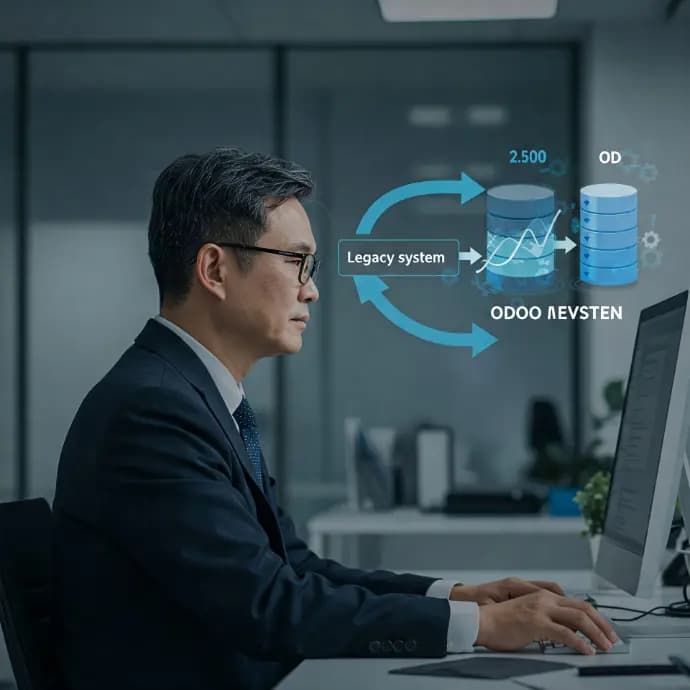
Odoo · AMC & upgrades
Proactive Odoo care for live systems — incident handling, preventive maintenance, upgrades, and takeover of environments we did not originally build.
We show the delivery record upfront: partner credentials, published case studies, and NDA-friendly engineering work you can review before sending an inquiry.
Official partner credentials across Community and Enterprise delivery.
Community & Enterprise Editions implementations, migrations, integrations, and custom modules.
Custom modules across client projects, integrations, migrations, and partner work.
Software delivery across employment, freelance consulting, and founder-led projects.
Partner-friendly delivery where client names and confidential work stay protected.
Migrations, Shopify, POS, manufacturing, logistics, and self-hosted deployments.
Support philosophy
Odoo support is not a mailbox for unexplained errors. It is a disciplined cycle of intake, triage, fix, verify, and prevent. We support systems we built and systems we inherit — with the same expectation: restore operations, then reduce recurrence.
Failed crons, stuck queues, and growing tables rarely announce themselves until invoices, stock, or website checkout break.
Clean custom module boundaries, tested backups, and known technical debt make version upgrades measurable instead of heroic.
When tickets are answered with root-cause fixes, shadow spreadsheets and WhatsApp-driven process hacks decline.
Agencies reselling Odoo need a maintenance partner who documents changes and respects client environments.
Incident lifecycle
Every serious incident should end with a weaker chance of repeating — not only a temporary workaround.
Issue arrives via email or chat with environment, steps, screenshots, and business impact. We acknowledge per plan SLA.
Classify severity (critical / high / normal), confirm whether it is configuration, data, custom code, or platform.
Prefer staging reproduction. Production hotfixes only when impact justifies controlled emergency change.
Apply the smallest safe fix. Include verification steps and note any temporary workaround left in place.
If the issue is systemic — missing indexes, brittle cron, weak access rules — schedule preventive work in the plan hours.
Ticket workflow
Clear ownership, severity, and closure criteria keep support measurable for both sides.
Each ticket has one responder accountable for status until closure — no bouncing between anonymous inboxes.
Critical: operations blocked (posting, checkout, warehouse). High: major feature impaired. Normal: inconvenience or enhancement.
Non-emergency changes go through staging. Production windows are agreed, especially for accounting and inventory cutovers.
A ticket closes when the reporter confirms behaviour or when agreed verification steps pass and are recorded.
SLA explanation
Response time is acknowledgement and start of triage — not always a full permanent fix in the same window. Resolution depends on access, data complexity, and whether a code change needs staging validation. Chat channels often move faster when an engineer is online; email remains the audit trail for formal requests.
Teams that need reliable coverage without a large retainer
Businesses that run daily operations on Odoo
Mission-critical Odoo with stricter response expectations
Escalation
Escalation is a defined path — not a hope that someone senior notices the thread.
Intake, reproduction, configuration fixes, known-module patches, and coordination with your admin users.
Complex custom code, performance, migration side-effects, and multi-module regressions.
When the system is structurally unstable, we recommend a formal rescue assessment rather than endless hotfixes.
Methodology
Retainers exist to reduce firefighting — through hygiene, monitoring, upgrades, and honest reporting.
Review failed jobs, growing tables, unused crons, and fragile customisations before they become incidents.
Track Odoo security notices and dependency updates relevant to your deployment model (sh, Docker, on-premise).
Watch slow requests, heavy reports, and database symptoms. Fix hotspots with measured changes — not speculative rewrites.
Plan upgrade paths with a staging clone, custom module compatibility review, and cutover checklist.
Periodic review of backups, SSL, disk, workers, and critical workflows (orders, invoices, stock moves).
Monthly or quarterly summary of tickets, recurring themes, hours used, and recommended next actions.
Knowledge transfer
We document recurring patterns and configuration boundaries so simple cases can move in-house over time.
Maintenance philosophy
Close incidents with verification — and note whether prevention work is needed.
Staging-first for non-emergencies; production windows for risky changes.
Severity, owner, and next update beat vague “looking into it” threads.
Recurring tickets become backlog items so the environment gets quieter, not noisier.
Long-term support
Implementation bugs in our delivered work, reported within 30 days, are fixed at no additional cost. Features and scope changes are separate.
After the complimentary window, SLA plans cover incidents, monitoring, and controlled enhancements.
Hygiene work reduces recurring fires — certificates, jobs, dependencies, and performance hotspots.
You keep repos, credentials, and documentation if you change partners later.
Why trust this engagement
Relevant proof only — full credentials and portfolio remain available site-wide.
Email and chat response commitments by plan.
Hygiene before the next outage.
Baseline first, then retainer.
Applies to our newly delivered implementations.

Multi-company migration · Manufacturing
Multi-company Odoo migration and business process automation for one of Dubai's leading textile trading and manufacturing groups.
On-premise deployment
Odoo on secure self-hosted Docker infrastructure. Automated Stripe fee accounting, bulk ecommerce variants, and finance workflows — delivered in a focused migration and deployment engagement.
Published guides, tools, and comparisons — no manual URL required.
Next step
If go-live is stuck or custom code is opaque, start with a rescue assessment.
Yes. We start with access, a module inventory, and a short risk baseline. Some environments need a paid assessment before a retainer if the codebase is opaque or unstable.
Plans define response windows during agreed support hours unless an Enterprise contract explicitly includes extended coverage. Critical incidents are prioritised within those terms.
This page is Odoo-specific: ORM, accounting integrity, inventory, POS, and Enterprise/Community upgrade reality. Broader web, mobile, and server care also exists on our Maintenance page.
Upgrade planning and compatibility review can sit inside Professional/Enterprise retainers. Large version jumps usually need a scoped upgrade project in addition to the support plan.
We separate break/fix support from enhancements. Enhancement hours may be included in the plan or quoted separately so support capacity stays available for incidents.
Email for formal requests and audit trail; WhatsApp, Telegram, or Slack for faster coordination when included in the plan. We agree the primary channel at onboarding.
Yes. We baseline access, risks, and documentation gaps first. Unstable systems may need assessment (or Odoo Rescue) before a standard retainer or dedicated seat.
Severity rules decide interrupt priority. Support plans define acknowledgement windows; Enterprise includes faster critical response. True emergencies need access and a clear business impact statement.
Knowledge transfer, then a 30-day complimentary window for implementation bugs in our delivered work. Ongoing care moves to a maintenance or Odoo Support retainer if you want continuous coverage.
Yes — run/deploy notes, integration contracts, and handover packages. Documentation is part of delivery, not an unpaid afterthought.
After you contact us
Clear expectations reduce buying uncertainty — no mystery black box after you hit submit.
Within one business day we confirm understanding, ask for missing access/context, and propose the right engagement type.
Project, dedicated capacity, support retainer, or rescue assessment — matched to your constraint, not a generic package.
Scoped next step, commercial terms, and kickoff checklist. No hostage tooling — your repos and credentials stay yours.
Share environment size, version, and whether you need Essential, Professional, or Enterprise response expectations.